
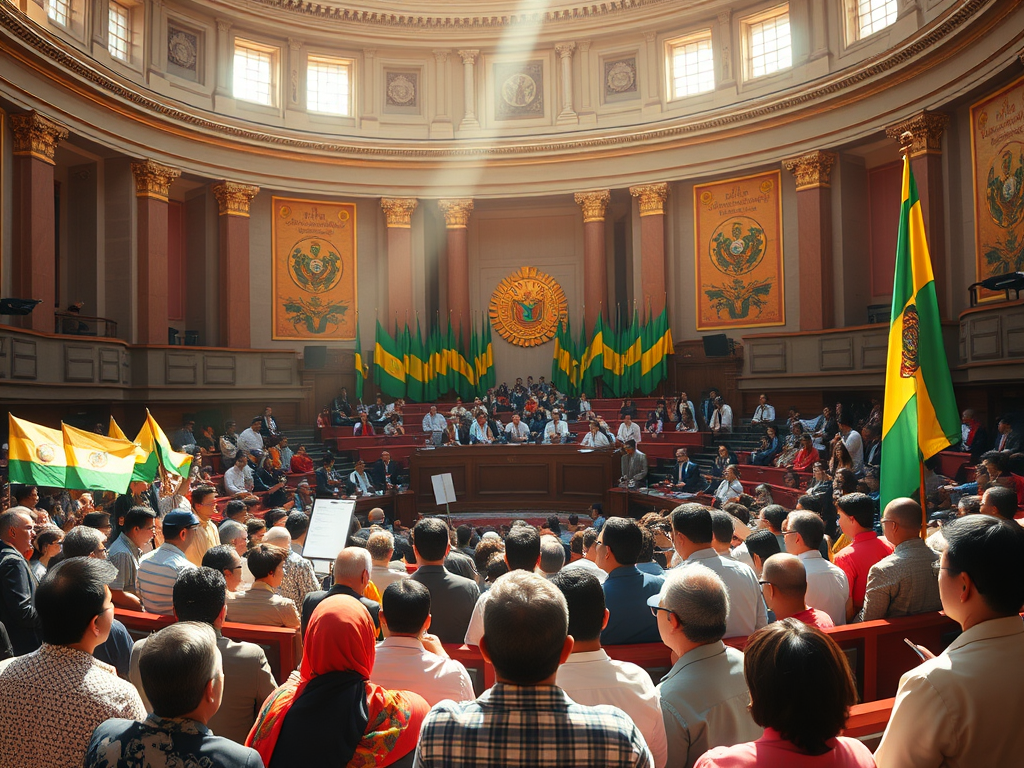
When Evo Morales became president of Bolivia in 2006, he was hailed as a transformative figure — the country’s first Indigenous leader, a symbol of empowerment for millions long excluded from political life. His early years in office were marked by economic growth, social reform, and a strong sense of national pride. Yet, over time, his story became a study in how power, once consolidated, can resist rotation — even in democracies that once promised renewal.
Bolivia’s Constitution of 2009, written under Morales’s leadership, limited presidents to two consecutive terms. Morales completed his second term in 2014, but before that term ended, he argued that his first term (2006–2009) didn’t count under the new Constitution. The Constitutional Court, filled largely with his appointees, agreed — allowing him to run for a third term in 2014, which he won.
By then, critics were already warning that Bolivia’s democracy was being reshaped around a single figure. The principle of rotation of power — that leadership should change hands periodically to preserve balance and accountability — was being weakened. In 2016, Morales sought to amend the Constitution again through a national referendum, asking voters to abolish term limits entirely. The Bolivian people rejected the proposal — a clear sign that the public wanted limits on presidential tenure.
But two years later, in 2017, the Constitutional Court ruled that term limits violated Morales’s human rights, effectively nullifying the referendum result and allowing him to seek a fourth term. That decision — justified on the grounds of “political rights” — was widely seen as a distortion of democratic norms. The very mechanisms of constitutional law, designed to check power, were turned into tools to perpetuate it. Morales ran again in 2019, claiming victory amid allegations of electoral fraud.
Mass protests erupted, international observers questioned the integrity of the vote, and amid escalating tension, Morales eventually resigned and fled the country. What began as a movement of inclusion and social justice had, by its fourth term, become a cautionary tale about how even popular leaders can bend institutions to extend personal power.
 Home
Home 
Leave a comment