
Presenting Rotation of Power at Cambridge Law School: A Conversation on Democratic Competition
It was a privilege to present my recent book, Rotation of Power: A Theory of Democratic Competition, at Cambridge Law School. The event brought together academics, students, and researchers for an engaging discussion on one of the central questions facing constitutional democracies today: how can democratic systems preserve genuine political competition and prevent the entrenchment of power?
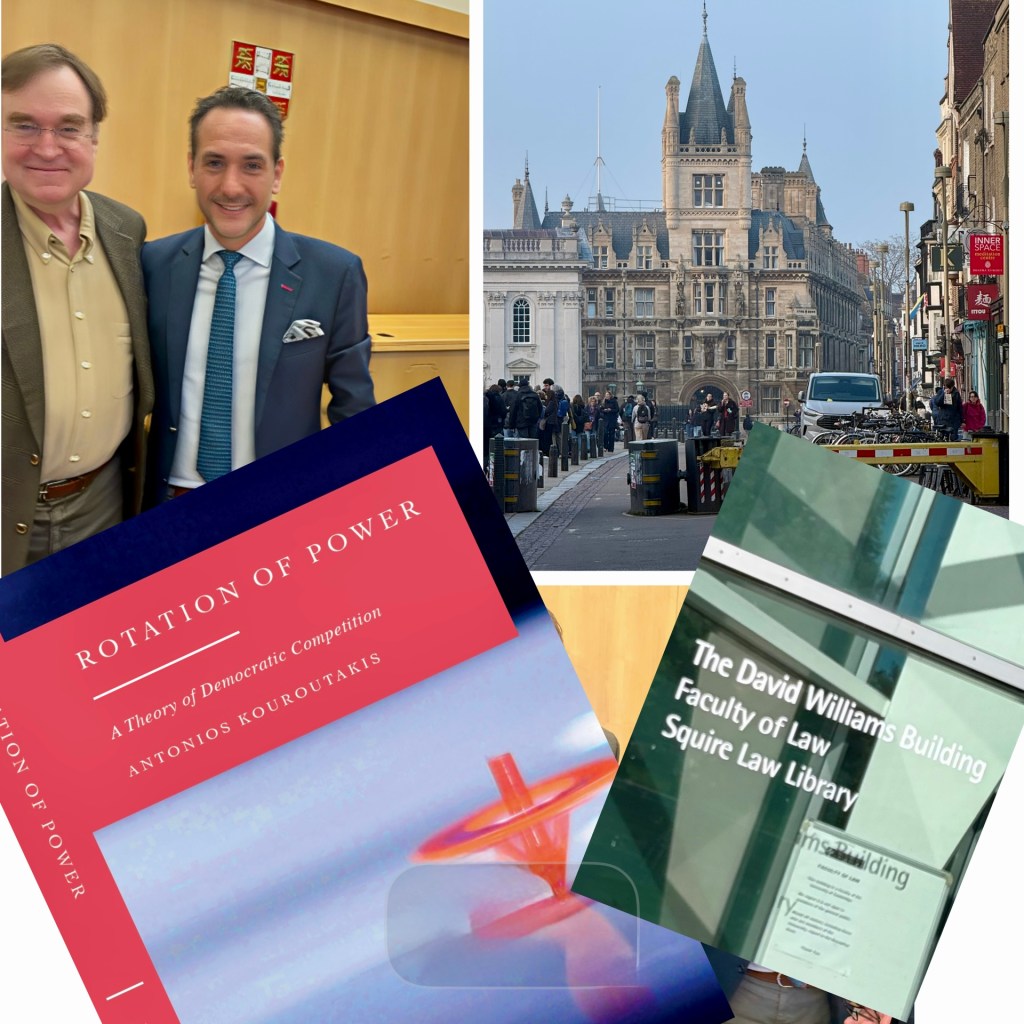
The presentation provided an opportunity to discuss the book’s central thesis—that democracy is not defined solely by elections, but by the realistic possibility that those in power can lose office through fair and competitive political processes. While elections remain the cornerstone of democratic governance, they alone cannot guarantee democracy if incumbents are able to manipulate institutions, rules, or political conditions to insulate themselves from meaningful electoral competition. As the book argues, the principle of the rotation of power is an indispensable feature of constitutional democracy and deserves greater recognition in both constitutional theory and practice.
What made the Cambridge event particularly rewarding was not simply the presentation itself, but the lively and thoughtful discussion that followed. I was especially grateful for the insightful comments and questions from Professors John Allison, Trevor Allan, and Kirsty Hughes, whose expertise in constitutional law, the rule of law, and democratic governance enriched the conversation considerably.
Our discussion explored several themes at the heart of contemporary constitutional scholarship. We reflected on the relationship between the rule of law and democratic competition, the constitutional limits on incumbent self-entrenchment, and the role of courts and independent institutions in safeguarding fair political competition. The exchange also highlighted the importance of developing constitutional principles capable of responding to democratic backsliding while respecting democratic choice.
Book Launch of Rotation of Power: A Theory of Democratic Competition at ICON•S Annual Conference, Dublin
One of the highlights following the publication of Rotation of Power: A Theory of Democratic Competition was its book launch at the Annual Conference of the International Society of Public Law (ICON•S), hosted by University College Dublin. Bringing together constitutional scholars from around the world, the conference provided an ideal setting to discuss the book’s contribution to contemporary debates on democracy, constitutionalism, and the rule of law.
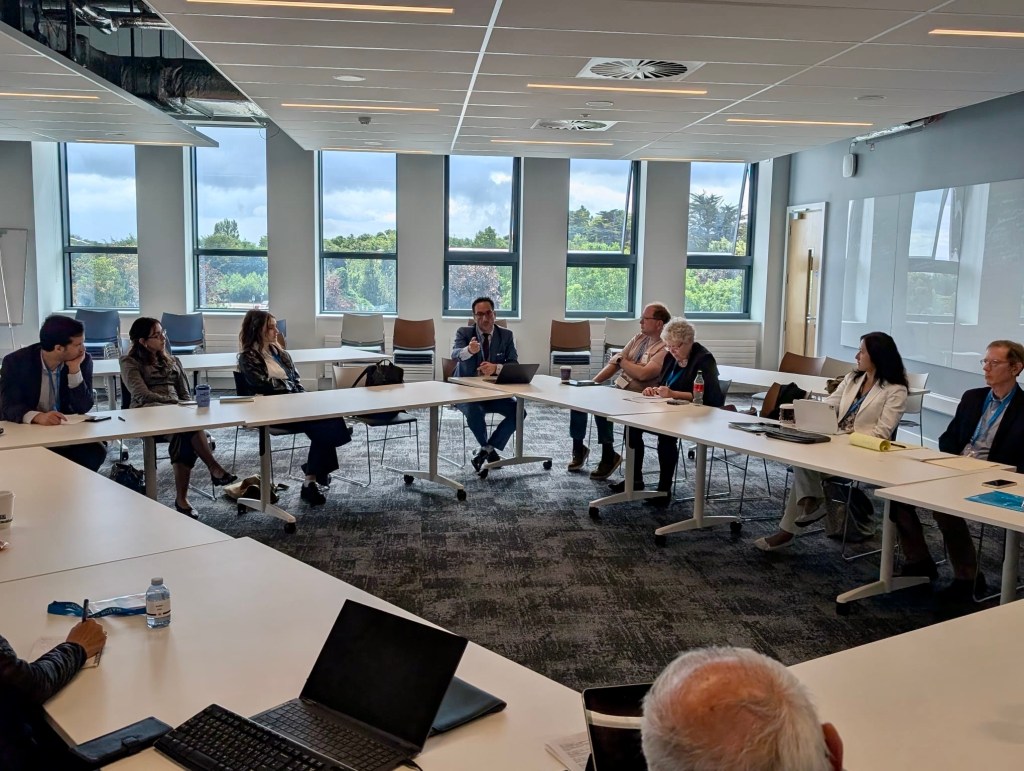
I was delighted that the launch was chaired by Professor Sergio Verdugo, whose thoughtful moderation framed an engaging and intellectually rich discussion. It was a particular privilege to have such an outstanding panel of discussants: Professors Margit Cohn, Stephen Gardbaum, Yvonne Tew, Catarina Santos Botelho, and Chris Monaghan. Each brought a distinct comparative and theoretical perspective, reflecting the diversity of approaches that characterises contemporary public law scholarship.
The discussion centred on the book’s principal argument: that the genuine possibility of the peaceful rotation of political power should be recognised as a foundational principle of constitutional democracy. While competitive elections are essential, the book argues that democracy requires more than periodic voting. Constitutional systems must also ensure that governing parties cannot manipulate legal or political institutions to entrench themselves in office and undermine meaningful political competition.
The panel explored this thesis from a variety of perspectives. Questions were raised about the relationship between democratic competition and constitutional design, the role of courts in protecting electoral fairness, the comparative experiences of constitutional democracies facing democratic backsliding, and the extent to which the principle of the rotation of power can be understood as an emerging constitutional norm. The breadth of the discussion reflected both the comparative nature of the book and the increasingly global concern with preserving democratic resilience.
Book Discussion at Fordham Law School: Rotation of Power: A Theory of Democratic Competition
On Tuesday, September 29, Fordham Law School will host a book discussion featuring my book, Rotation of Power: A Theory of Democratic Competition.
The event will bring together leading scholars of constitutional law and democratic institutions for a conversation about the book and its broader implications for understanding democratic competition and the organization of political power.
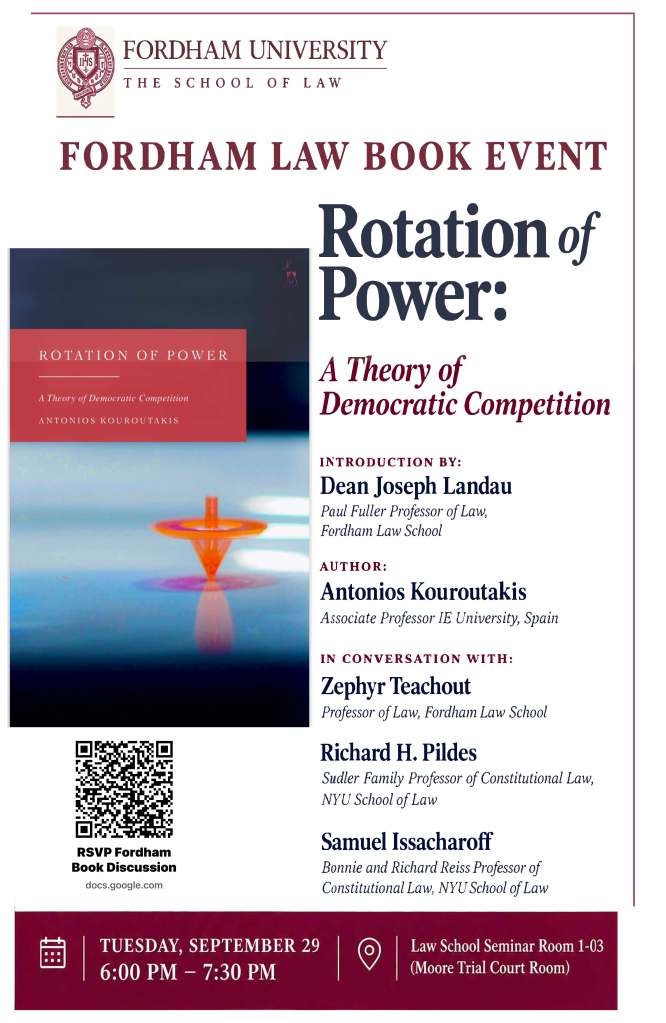
The program will begin with an introduction by Dean Joseph Landau, Paul Fuller Professor of Law at Fordham Law School. Kouroutakis will then discuss his book in conversation with Zephyr Teachout, Professor of Law at Fordham Law School, Richard H. Pildes, Sudler Family Professor of Constitutional Law at NYU School of Law, and Samuel Issacharoff, Bonnie and Richard Reiss Professor of Constitutional Law at NYU School of Law.
Rotation of Power in Spanish: A New Edition Published by Aranzadi LA LEY
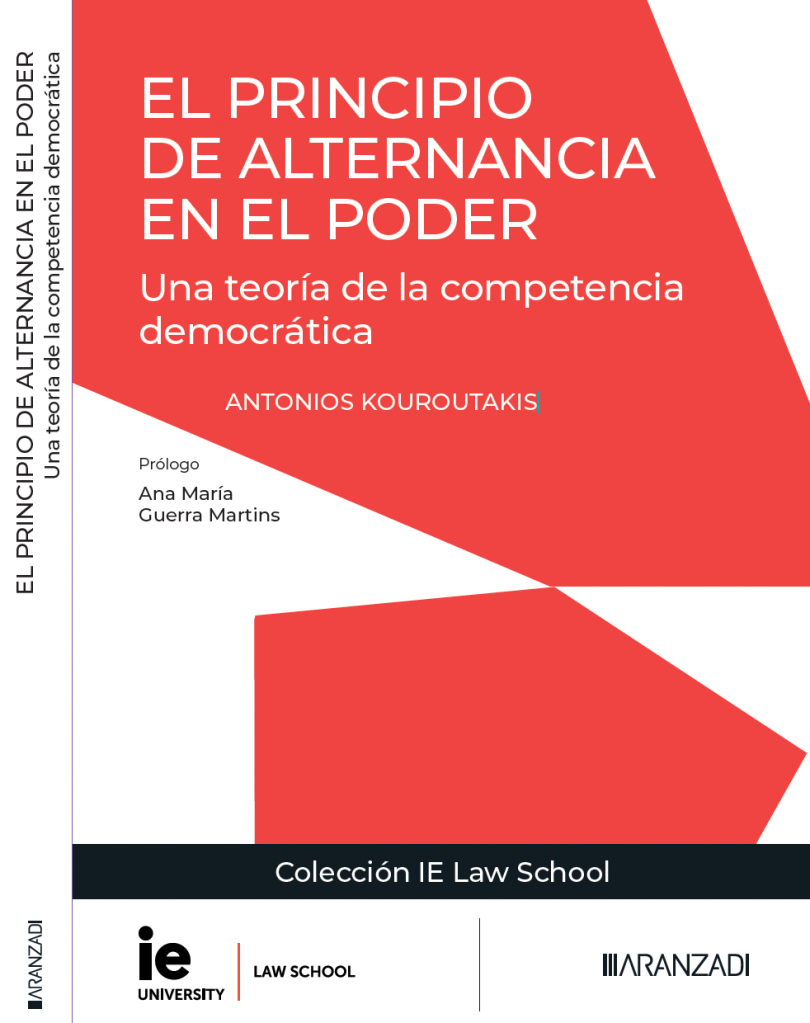
Rotation of Power: A Theory of Democratic Competition, is now available in Spanish under the title El principio de alternancia en el poder: Una teoría de la competencia democrática, published by Aranzadi LA LEY as part of the IE Law School Collection.
The Spanish edition marks an important step in bringing the book’s analysis of democratic competition, constitutional law, and the alternation of political power to a wider Spanish-speaking legal and academic audience.
From Rotation of Power to El principio de alternancia en el poder
The central premise of the book is that the alternation of political power is not merely an incidental feature of democratic politics, but an important substantive dimension of liberal democracy. The book examines the legal and constitutional mechanisms that can protect meaningful political competition against political entrenchment.
The Spanish edition provides an opportunity to engage with these questions in a broader comparative and Spanish-speaking context. Its publication by Aranzadi LA LEY, one of the leading legal publishers in the Spanish-speaking world, makes the book accessible to scholars, practitioners, students, and others interested in constitutional and political law.
The Spanish title, El principio de alternancia en el poder, places particular emphasis on the concept of alternancia en el poder which is at the heart of the book’s theoretical framework.

